

Key Takeaways
- US Composite PMI rose to 52.0 in April 2026, beating forecasts of 50.6
- Manufacturing PMI surged to 54.0 — its highest reading in 47 months
- Iran war has closed the Strait of Hormuz, extending delivery times to 3.5-year highs
- Output prices hit 59.9 — the loftiest level since July 2022
- Federal Reserve rate cuts appear increasingly distant as inflation accelerates
WASHINGTON — American business activity staged a meaningful comeback in April 2026, shaking off the near-stagnation that gripped the economy in March. But the recovery arrived wrapped in a troubling set of caveats. Supply chain disruptions caused by the ongoing U.S.-Israeli military conflict with Iran are fanning inflation at a pace not seen in years, and the window for Federal Reserve interest rate cuts is narrowing with every data point.
S&P Global’s flash survey of private sector activity showed its Composite PMI Output Index — a combined reading of manufacturing and services performance — rising to 52.0 in April, a solid improvement from the 50.3 recorded in March. That March figure had been the weakest composite reading since September 2023, making April’s rebound all the more significant. The result comfortably surpassed forecasts from economists surveyed beforehand, who had expected only a marginal increase to around 50.6. Any reading above 50 signals that private sector activity is expanding.
Manufacturing Leads a Broad Recovery
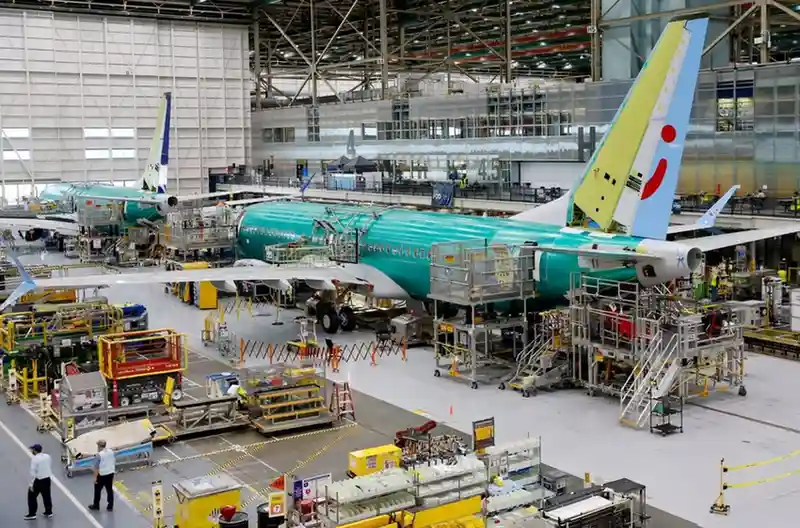
The clearest bright spot in April’s data was manufacturing. The sector’s PMI climbed to 54.0, its strongest reading in 47 months, compared to 52.3 in March. Analysts had penciled in a more modest recovery to 52.5, making the actual figure a notable upside surprise. A sub-index tracking new orders received by factories rose sharply to 54.8 from 52.3 — a signal that demand for manufactured goods is accelerating.
S&P Global credited much of the manufacturing surge to what it described as deliberate inventory-building by companies bracing for further supply shortages and price hikes. Rather than reflecting a genuine uplift in end-market demand, businesses appear to be making large precautionary purchases — stocking up on raw materials and components before conditions deteriorate further. It is the kind of activity that can generate impressive short-term PMI readings while masking fragility in underlying demand.
The services sector, which accounts for the vast majority of U.S. economic activity, also bounced back — but more modestly. Its PMI recovered to 51.3 from 49.8 in March, ending a brief but notable contraction. The March dip into sub-50 territory had been the first services-sector contraction since January 2023, so April’s return to expansion is welcome. Nevertheless, analysts cautioned that services remains a weight on overall growth rather than a driver of it.
“The April PMI is broadly consistent with an economy struggling to sustain annualized growth much beyond 1 percent,” said Chris Williamson, chief business economist at S&P Global Market Intelligence. “The vast service sector is acting as the principal drag, and even the manufacturing rebound owes more to defensive stockpiling than to genuine demand strength.”
How the Iran War Is Strangling Supply Chains
No economic analysis of the current moment can avoid the geopolitical dimension. The Strait of Hormuz — the narrow waterway through which roughly 20 percent of global oil flows — has been effectively shut to normal commercial traffic since Tehran responded to U.S.-Israeli military strikes that began on February 28. The closure has sent shockwaves through commodity markets and industrial supply chains simultaneously.
Oil prices have climbed sharply, as have the costs of commodities that flow through the strait or whose production depends on Hormuz-linked energy and chemicals — including fertilizers, petrochemicals, and aluminum. President Donald Trump extended a ceasefire with Iran on Tuesday, but a U.S. Navy blockade of Iranian ports remains in force, leaving the fundamental supply disruption intact even as direct hostilities pause.
The practical consequence for American industry has been severe. Delivery times from suppliers to factories are now the longest they have been since August 2022, according to S&P Global’s survey. The situation is made worse by the fact that businesses were already operating in a strained logistics environment before the conflict began — the Trump administration’s sweeping import tariffs had already raised procurement costs and squeezed supply availability. The war has layered a new and more acute shock on top of a system that had not yet fully absorbed the first one.
Prices Are Rising — Fast
The inflation data embedded in April’s PMI report is where the real alarm lies. S&P Global’s measure of the prices businesses charge customers for their goods and services — the output prices index — jumped to 59.9 in April, the highest reading since July 2022. That compares to 58.1 in March. Meanwhile, the gauge tracking what businesses themselves pay for inputs rose to an 11-month high of 62.6, up from 60.9 the previous month.
Put plainly: companies are paying more for everything that goes into their products, and they are passing those costs on to customers at the fastest rate in nearly four years. This dynamic — rising input costs feeding into rising consumer prices — is the textbook recipe for a sustained inflation reacceleration, not a temporary blip.
“It will likely be increasingly hard to make a case for rate cuts if inflation follows the path signaled by the PMI while the economy continues to eke out only modest growth,” Williamson said, in remarks that will unsettle those hoping for Federal Reserve relief in the months ahead.
The Federal Reserve’s Narrowing Options
For the Federal Reserve, the April PMI data is awkward at best and damaging at worst. The central bank has been watching inflation indicators carefully before committing to any easing of monetary policy. With output prices now at their highest level in roughly four years and input pressures building further, the data gives policymakers little justification for lowering interest rates in the near term.
Yet the broader growth picture is hardly convincing either. An economy grinding along at just above 1 percent annualized growth is not strong enough to absorb the full weight of higher rates indefinitely. The Fed is effectively caught between two bad options: cut rates and risk reigniting inflation, or hold rates and risk suffocating an economy that is already struggling to grow.
Economists who track the Fed’s decision-making expect policymakers to hold their current stance at upcoming meetings and wait for further evidence. But if the geopolitical situation in the Strait of Hormuz remains unresolved and tariff pressures persist, that waiting game could stretch well into the second half of the year or beyond.
Employment Offers Little Reassurance
The labor market component of the PMI survey added little comfort to the picture. The private-sector employment index edged up to just 50.2 in April after falling below the expansion threshold to 49.7 in March — a reading that essentially describes a job market standing still. Manufacturing headcount actually fell during the month, while services-sector hiring barely registered.
Importantly, S&P Global noted that the weakness in hiring was not solely attributable to the usual culprits of voluntary resignations and persistent labor shortages. Companies are actively citing concerns about the need to contain staffing costs as demand remains uncertain and input prices continue to climb. When employers start cutting headcount in response to margin pressure, it is a signal that the underlying economic environment is more challenging than headline activity numbers suggest.
That combination — rising prices alongside stagnant employment and only marginal growth — echoes the stagflationary dynamics that caused significant economic pain in previous decades, and that policymakers have been anxious to avoid repeating.
What Comes Next
April’s PMI rebound is real, and it should not be dismissed. Manufacturing is expanding at a healthy clip, services have returned to growth, and the private sector is not contracting. On the surface, that is a genuinely better story than March told.
But the quality of the recovery matters as much as its existence. When the primary driver of economic activity is fear-driven stockpiling rather than genuine consumer and business demand, the improvement is inherently temporary. Once inventories are replenished — or once companies decide the threat of further shortages has passed — that particular engine of growth will quiet down. What will remain is an economy with modest underlying momentum, elevated prices, constrained labor, and a Federal Reserve with very little room to maneuver.
The coming months will be decisive. If the Strait of Hormuz reopens to normal traffic and supply chains begin to normalize, the inflationary pressure built into the current PMI readings could ease faster than feared. If the conflict persists or escalates, however, the price spiral that is already underway could become considerably harder to contain — and the conversation about Federal Reserve rate cuts could shift from “when” to “whether.”
Frequently Asked Questions
What is the US Composite PMI for April 2026? +
The S&P Global flash US Composite PMI Output Index rose to 52.0 in April 2026, up from 50.3 in March. Any reading above 50 signals expansion in private sector activity. The result exceeded economist forecasts of 50.6, making it a meaningful upside surprise.
How is the Iran war affecting US supply chains in 2026? +
The U.S.-Israeli conflict with Iran, which began with military strikes on February 28, 2026, effectively closed the Strait of Hormuz to normal commercial shipping. This has driven US factory delivery times to their longest since August 2022, raised oil and commodity prices significantly, and accelerated inflation across multiple sectors of the American economy.
Will the Federal Reserve cut interest rates in 2026? +
Federal Reserve rate cuts look increasingly unlikely in the near term. April 2026 PMI data shows output prices at their highest level since July 2022, signaling accelerating inflation. Economists at S&P Global Market Intelligence warn it will be very difficult to justify rate cuts while price pressures remain at current levels.
Why did US manufacturing PMI hit a 47-month high in April 2026? +
The manufacturing PMI jumped to 54.0 in April 2026, a 47-month high, largely driven by businesses stockpiling inventory ahead of anticipated supply shortages and further price increases tied to the Iran war and existing US tariffs. The reading reflects precautionary buying rather than a broad surge in consumer demand.
What does the April 2026 PMI data mean for US inflation? +
The data strongly suggests US inflation will accelerate in the months ahead. S&P Global’s output prices index rose to 59.9 — its highest reading since July 2022 — while input prices hit an 11-month high of 62.6. Businesses are paying more for materials and passing those increased costs on to consumers at the fastest pace in nearly four years.