

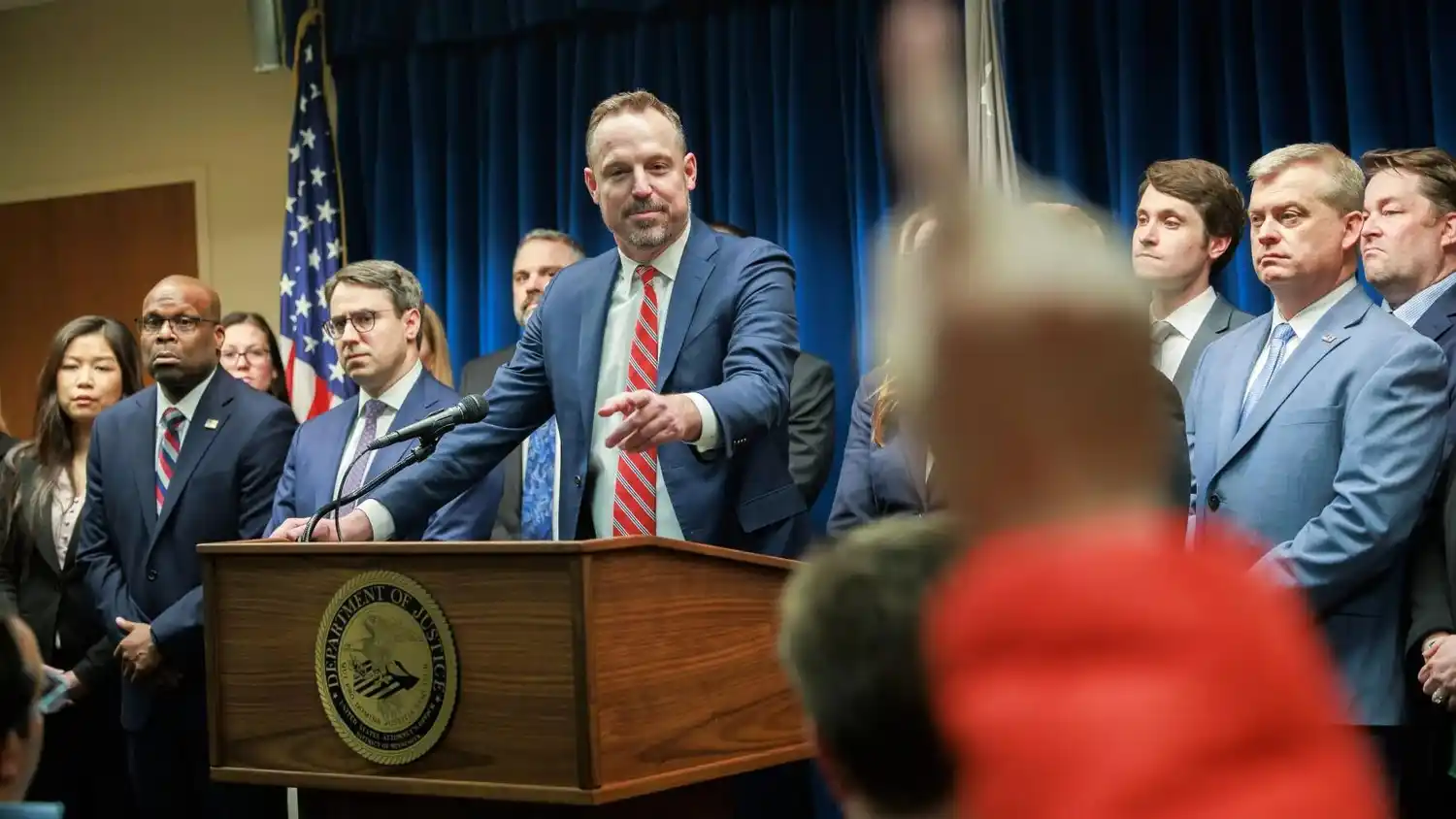
In the past few months, the U.S. Attorney's Office in Minnesota has lost a lot of experienced employees. This has made it much harder to handle federal cases.
A well-known example is Cory Allen McKay, a 47-year-old man with a criminal record that goes back 30 years. He has a long history of violent crimes, like aggravated assault, killing a pregnant woman at home, and shooting someone in the chin with a shotgun. Federal officials charged him with selling meth in May 2025. Because he has a history of violent crimes, he could get up to 25 years in prison for this.
The case began when FedEx workers in Fargo, North Dakota, saw a package from California that looked suspicious and had almost 10 pounds of very pure methamphetamine inside. It was sent to McKay. The police thought it was worth about $80,000 on the street. Police arrested him after a controlled delivery and found text messages that connected him to possible traffickers in Minnesota, California, Chicago, and Mexico.
"This office is having a harder time going after dangerous criminals in drug trafficking, fraud, gangs, and violent crime," said a former prosecutor who knows the situation.
Before the federal indictment, McKay had been in jail for almost a year on state charges that were related to the case. Before his trial, prosecutors were able to keep him in jail because he had a history of breaking his probation, using fake names, and losing in court. But in early 2026, when the number of staff members went down, the office—now run by Trump appointee Daniel Rosen—asked for a delay in the trial because the prosecutor who was supposed to handle the case suddenly retired. They dropped all the charges days later without giving a clear reason. This let McKay out of Sherburne County Jail on January 31, 2026.
Jean Brandl, McKay's lawyer, was shocked by how quickly the case was thrown out. She didn't know about it until her client was let go. She said the prosecutor who was leaving was very professional, but she also said that the result was good for her client.
A lot of people leaving makes federal law enforcement less effective.
Things got worse when ICE agents were involved in incidents, like a deadly shooting in January 2026, when some career staff didn't agree with DOJ orders about investigations. Prosecutors were also upset about how immigration cases were being handled and how law enforcement kept breaking court orders, which made things harder for judges.
Tensions escalated after incidents involving ICE agents, including a January 2026 fatal shooting, where some career staff disagreed with DOJ directions on investigations. Prosecutors also expressed frustration over resource diversion to immigration matters and repeated court order violations by enforcement agencies, straining relations with judges.
A group of former U.S. attorneys from Minnesota said in public that a lot of their coworkers couldn't keep working with a clear conscience in the changing environment. Some of the most important people who left were experienced leaders who were in charge of big investigations into fraud and trafficking.
With fewer staff, the office has resorted to importing temporary prosecutors, seeking continuances, dismissing viable cases, or pushing quick pleas. Defense attorneys are exploiting delays by demanding speedy trials or filing motions that overburden remaining personnel.
Broader Impact on Drug and Public Safety Cases
McKay's case is not isolated. Authorities recently dropped charges against another suspect arrested with thousands of fentanyl pills and pounds of cocaine intended for Twin Cities distribution. A separate Rochester methamphetamine conspiracy case involving three pounds of the drug was also dismissed.
Local law enforcement officials, including sheriffs, have voiced alarm over released individuals posing ongoing risks to communities like Moorhead, where McKay had ties.
Experts and former officials say that long-term shortages could make it harder to fight drug networks, violent gangs, sexual predators, and large-scale fraud. The Trump administration says that immigration policies have made public safety better, but critics say that the policies have made it harder to fight crime in the areas where they have been put into place.