

Federal Judge Blocks U.S. Immigration and Customs Enforcement From Routine Arrests Near Manhattan Immigration Courts.





A federal judge in New York ruled that Immigration and Customs Enforcement agents cannot routinely arrest immigrants at or near immigration courthouses in Manhattan, delivering a major legal setback to the Trump administration's immigration enforcement strategy. U.S. District Judge P. Kevin Castel issued the order after immigrant-rights groups challenged the growing practice of courthouse arrests.
The ruling applies to three major immigration court locations in lower Manhattan: 26 Federal Plaza, 201 Varick Street, and 290 Broadway. Judge Castel stated that people must be able to attend immigration hearings without fear of being detained immediately afterward by federal agents.
The judge concluded that ICE's courthouse arrest practices likely violated existing legal protections and threatened immigrants' ability to participate fairly in legal proceedings. The court emphasized that the immigration system depends on people appearing for hearings voluntarily and safely.
The lawsuit was brought by immigrant advocacy organizations including the New York Civil Liberties Union, the American Civil Liberties Union, and Make the Road New York. The groups argued that ICE arrests near courthouses created fear throughout immigrant communities and discouraged people from attending hearings or seeking legal protections.
Judge Castel also criticized the federal government's decision to abandon previous restrictions limiting immigration arrests near sensitive locations such as courthouses. The ruling suggested the administration may have acted "arbitrarily and capriciously" when it withdrew earlier enforcement guidelines.
Immigrant advocates described the decision as one of the most significant legal victories against the administration's courthouse enforcement policies. They argued the ruling protects due process rights and ensures immigrants can continue participating in legal proceedings without intimidation.
The decision immediately intensified national debate over immigration enforcement, courthouse safety, and the limits of ICE authority during President Donald Trump's renewed mass deportation campaign.
Arrest After Court Ruling Sparks Outrage and Legal Questions
Only one day after Judge Castel issued the ruling, immigrant advocates reported that federal agents arrested a 21-year-old man near one of the protected Manhattan immigration court buildings. The arrest immediately triggered accusations that ICE may have violated the federal court order.
The Associated Press reported that the man was detained outside one of the Manhattan immigration facilities covered under the ruling. Advocacy groups and attorneys demanded immediate clarification regarding whether federal agents had ignored or misinterpreted the judge's restrictions.
The New York Legal Assistance Group and the New York Civil Liberties Union condemned the arrest and announced they were investigating the circumstances surrounding the detention. They argued the incident undermined the court's attempt to restore confidence in the immigration legal system.
Representative Dan Goldman publicly criticized the arrest, describing it as a "blatant violation" of the court order. He warned that continued courthouse arrests could seriously damage public trust in federal immigration proceedings and due process protections.
The Department of Homeland Security declined immediate public comment regarding the arrest or whether agents believed the detention complied with the judge's order. ICE officials previously argued that courthouse arrests remain important for immigration enforcement operations.
The controversy highlighted ongoing confusion surrounding immigration enforcement policies under Trump's second administration. Critics argued ICE has increasingly expanded aggressive arrest tactics at courthouses, workplaces, schools, and public areas despite repeated legal challenges.
Immigrant-rights groups warned that continued arrests near courthouses could discourage people from attending hearings, cooperating with courts, or reporting crimes. Advocates argued the fear generated by ICE enforcement creates broader public safety and constitutional concerns.
The incident therefore transformed the ruling from a legal victory into an immediate enforcement dispute over whether federal immigration authorities will fully comply with the judge's restrictions.
Immigration Arrest Policies Face Growing Court Challenges Nationwide
The New York ruling became part of a broader wave of legal challenges against Trump administration immigration enforcement policies across the United States. Federal judges in multiple states recently questioned ICE's authority involving warrantless arrests and courthouse enforcement practices.
In Colorado, a federal judge ruled that ICE officers violated court orders limiting warrantless immigration arrests. The court ordered additional training for agents after finding they repeatedly failed to comply with legal standards governing detention practices.
Federal courts in Washington, D.C., also ordered the administration to halt immigration arrests made without proper warrants or probable cause involving escape risk. Judges criticized what they described as overly broad enforcement interpretations under new ICE guidance.
Legal disputes have also spread to Texas, where a federal judge blocked major portions of the state's controversial immigration law that would have allowed state officials to arrest and deport migrants suspected of crossing the border illegally.
Immigrant advocacy groups argued the administration's aggressive courthouse arrest strategy threatens constitutional protections and undermines the legal system itself. Attorneys said immigrants increasingly avoid courts, including domestic violence and family proceedings, because of fears involving ICE enforcement.
The administration meanwhile defended its enforcement policies as necessary to carry out mass deportation efforts and maintain immigration control. ICE officials argued courthouse arrests are operationally efficient because individuals already appear at known locations for legal proceedings.
The increase in litigation spotlights rising tensions between federal priorities for immigration enforcement and judicial concerns about due process, constitutional protections and access to the courts. Several courts warned ICE practices may discourage participation in the legal system.
The legal disputes are increasingly about whether immigration enforcement can coexist with the functioning of courts, constitutional rights, and access to legal protections for vulnerable immigrant communities.
Trump Administration Continues Immigration Crackdown Despite Backlash
The legal battles came as the Trump administration continued to dramatically expand immigration enforcement across the country. ICE recently received billions in additional funding while expanding detention operations, deportation efforts, and arrests across multiple states.
The administration recently appointed David Venturella, a former private prison executive, as acting head of ICE following the departure of Todd Lyons. Advocacy groups criticized the appointment and warned it signals even more aggressive detention expansion ahead.
At the same time, the Justice Department intensified efforts to speed up deportation proceedings by targeting immigration judges it considers too slow or insufficiently aligned with administration priorities. Officials argued the immigration court system faces severe backlogs requiring major changes.
A recent Brookings Institution estimate found that more than 100,000 American children have already experienced the detention of at least one parent during renewed immigration raids since January 2025. Critics argued the human impact of the enforcement campaign continues growing rapidly.
The administration also faced backlash over highly publicized ICE operations involving aggressive arrest tactics, including incidents involving U.S. citizens and protests against immigration raids. Judges and civil-rights groups increasingly criticized what they described as militarized enforcement methods.
Supporters of the administration argued the enforcement expansion remains necessary to restore immigration control and carry out Trump's mass deportation promises. Immigration officials maintained that ICE continues operating lawfully and within federal authority.
Meanwhile, lawsuits involving detention policies, courthouse arrests, and warrantless enforcement actions continue rising sharply. Immigration-related federal lawsuits reached record levels in 2026, reports TRAC, as courts continue to scrutinize policies of the administration.
The ruling by the New York courthouse, therefore, became part of a much larger national conflict over immigration enforcement, constitutional protections, authority of the federal courts, and the direction of U.S. immigration policy under Trump's second administration.


Koepka’s Leap of Faith: What Comes Next After LIV Golf Exit
DECEMBER 24, 2025

Skenes and Skubal Win Cy Young Awards as Future Uncertainty Grows
NOVEMBER 12, 2025


Local News

The Big Ten gets former Pac-12 powerhouses Oregon, USC, Washington, and UCLA to join them.
Former Pac-12 teams Oregon, USC, Washington, and UCLA are thriving in the Big Ten, adapting to its physical, run-heavy style and reshaping the conference in their first full season.
LOCAL NEWS BY NOVEMBER 7, 2025

Seattle and Tacoma Celebrate Holiday Cheer with Winterfest and Lights Events
Seattle Winterfest and Tacoma's Lights bring festive cheer with ice skating, holiday concerts, and dazzling light displays to celebrate the season.
LOCAL NEWS BY DECEMBER 25, 2025
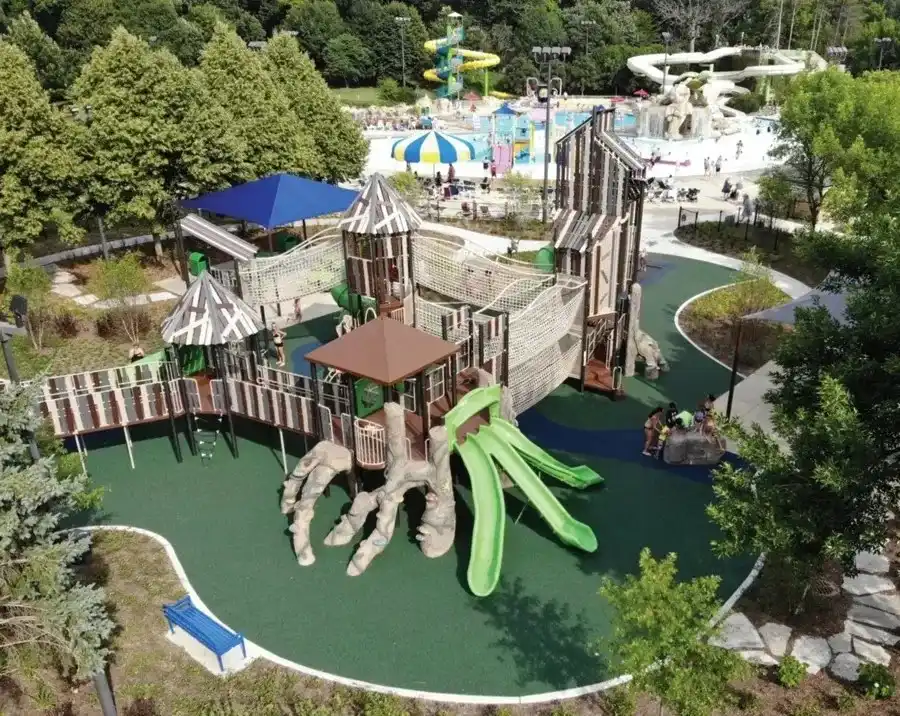
New Public Park Opens on Chicago's West Side
Chicago city officials opened a new 12-acre community park featuring walking trails, playgrounds, and green space for local families.
LOCAL NEWS BY NOVEMBER 9, 2025