
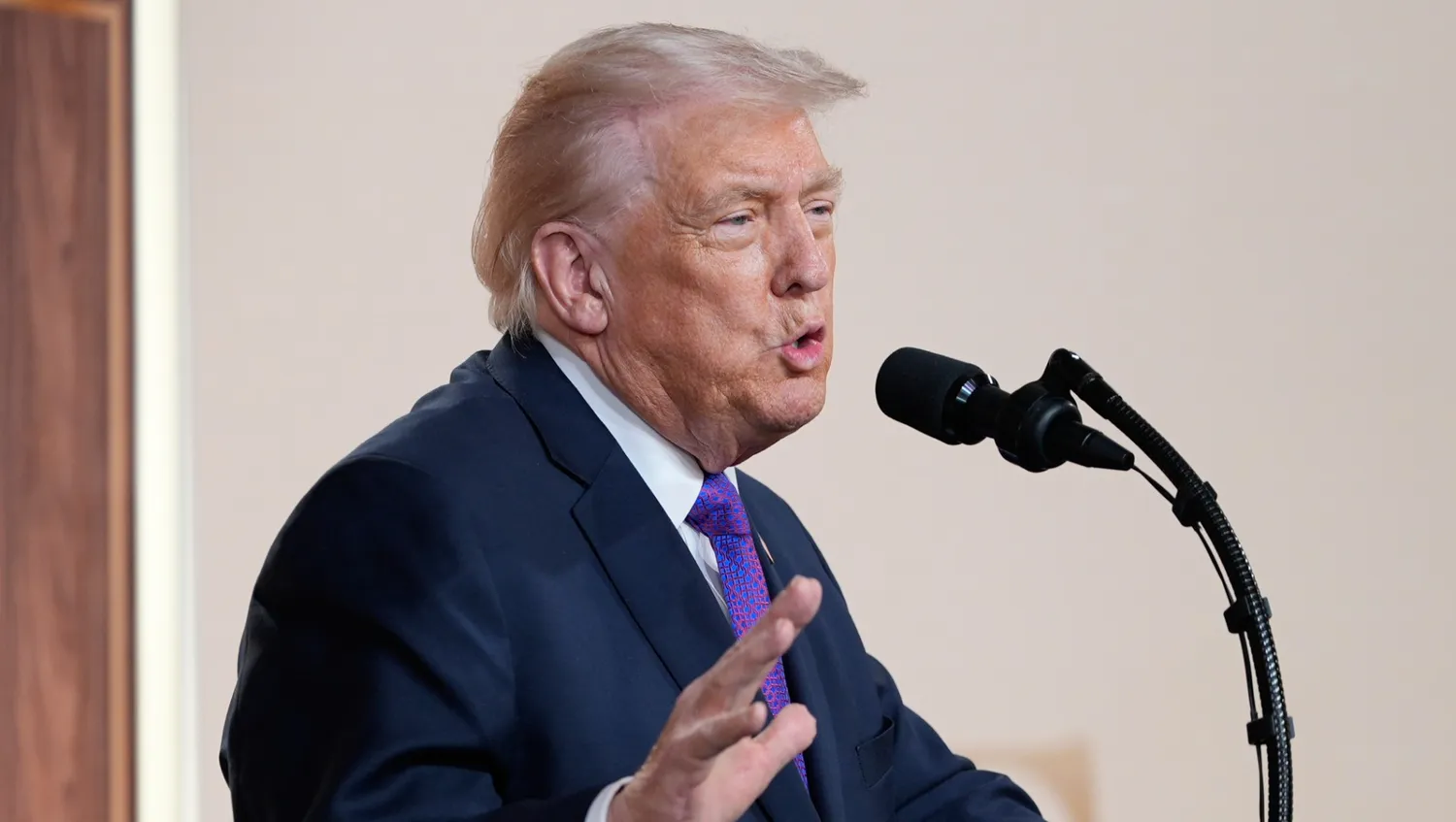
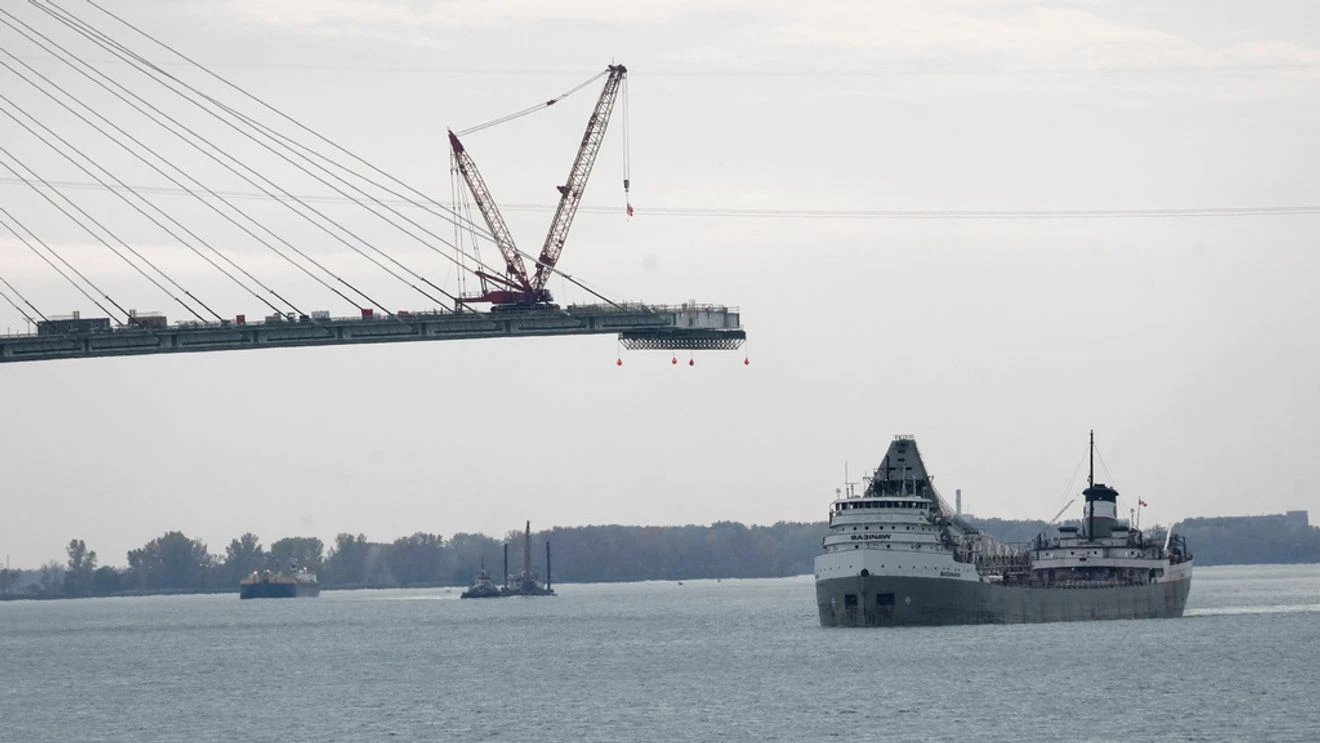
President Trump intensified his trade war rhetoric Monday, declaring that he would prevent the opening of the Gordie Howe International Bridge connecting Windsor, Ontario to Detroit, Michigan unless Canada agrees to provide what he considers adequate financial compensation to the United States. The $4.6 billion infrastructure project, which has been under construction since 2018, represents a critical economic link between the two nations and has long been considered vital to North American commerce and supply chains.
The president's latest ultimatum marks an unexpected reversal from his own 2017 position. In a joint statement with then-Prime Minister Justin Trudeau, Trump expressed his support for the bridge's completion, calling it "a vital economic link between our two countries." The shift underscores how dramatically U.S.-Canada relations have deteriorated since Trump initiated tariff escalations on his northern neighbor.
"I will not allow this bridge to open until the United States is fully compensated for everything we have given them, and also, importantly, Canada treats the United States with the Fairness and Respect that we deserve," Trump wrote in a lengthy statement on his social media platform. The comments come as House Democrats prepare to force a vote on Trump's proposed tariffs on Canadian imports, intensifying political pressure over the broader trade relationship.
The bridge project carries a complicated history. In 2012, Michigan's then-Governor Rick Snyder accepted a Canadian government proposal to finance the majority of construction costs—a rare diplomatic arrangement that required Snyder to use executive authority to bypass the state legislature. The bridge ultimately began construction in 2018 during Trump's first administration and has progressed steadily toward completion. In late January of this year, the U.S. Homeland Security Department officially designated the bridge as a port of entry, a critical step toward opening.
"Canada has treated the United States very unfairly for decades," Trump declared, reviving long-standing complaints about trade dynamics between the neighboring nations.
Trump blamed his predecessor Barack Obama for what he characterized as a "stupid" approval of the bridge project, conveniently omitting his own enthusiastic endorsement when he held the presidency. His criticism focused particularly on the Canadian government's decision to pursue closer trade relationships with China, which Trump views as fundamentally threatening to North American interests.
The president's statement included a claim that has alarmed both trade analysts and Canadian observers for its factual baselessness. Trump asserted that China would leverage any trade agreement with Canada to "terminate ALL Ice Hockey being played in Canada, and permanently eliminate The Stanley Cup"—a claim with no rational economic or political foundation. This particular assertion echoed comments Trump made during the previous month at his wife's documentary premiere, where he similarly warned that "China will eat Canada alive."
Such rhetoric has drawn criticism from elected officials representing border communities directly affected by any bridge delay. Senator Elissa Slotkin, a Michigan Democrat whose constituency would bear the economic consequences of the shutdown, responded sharply to Trump's threats. "Canceling this project will have serious repercussions," Slotkin stated. "Higher costs for Michigan businesses, less secure supply chains, and ultimately, fewer jobs."
Slotkin pointed out that Trump's own trade policies created the conditions he was criticizing. "The only reason Canada is on the verge of a trade deal with China is because President Trump has kicked them in the teeth for a year," she said, noting that the president was effectively punishing Michigan residents for trade conflicts he had initiated.
Bridge Project Reflects Decades of Binational Economic Partnership
The bridge represents far more than a single infrastructure project. It embodies the integrated nature of the North American economy, where supply chains and commerce have become deeply interconnected following decades of trade agreements, including the original NAFTA framework established in the 1990s and its successor, the USMCA (United States-Mexico-Canada Agreement).
The Canadian embassy in Washington, Michigan Governor Gretchen Whitmer's office, and the bridge authority declined to immediately comment on Trump's threats. However, Whitmer's office did note previously that the bridge project had undergone extensive environmental review, community consultation, and engineering analysis across more than a decade of development.
Trump has made numerous threats against Canada since returning to office, dramatically increasing tariff rates on a range of Canadian products and services. Last month, he threatened to impose tariffs as high as 100 percent on Canadian goods if the government proceeded with any trade agreement involving China, a threat economic analysts say could trigger severe disruptions to integrated North American production networks.
The broader pattern of Trump's Canada-focused rhetoric demonstrates a fundamental reshaping of presidential approach to the neighboring nation. Where previous administrations treated U.S.-Canada relations as a cornerstone of continental stability and economic growth, Trump has positioned Canada as a problem requiring aggressive confrontation and unprecedented tariff weaponization.