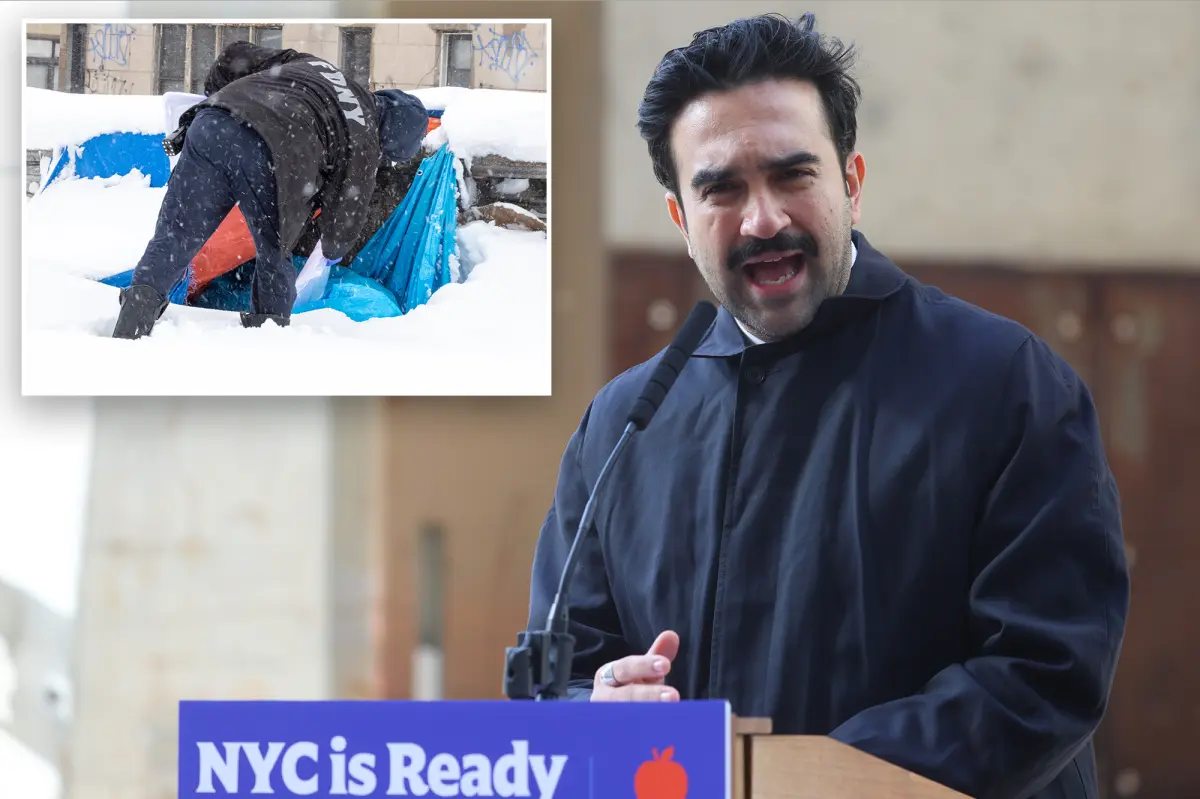
New York City will expand its emergency cold-weather response this winter, with Mayor Zohran Mamdani announcing a $25 million investment on Monday aimed at protecting homeless residents, speeding up snow removal and keeping apartments heated. The package arrives just weeks before the official start of winter and follows a punishing first season for his administration.
Last winter, at least 20 cold-weather deaths were reported in the city, and residents struggled to dig out after a major blizzard. Asked whether he wished the new measures had been in place earlier, Mamdani defended city workers but said longstanding practices were not enough for the scale of last winter’s conditions.
“No New Yorker should face the dangers of winter alone,” Mamdani said in announcing the plan.
A Bigger, Smarter Code Blue System
Last winter, Mamdani coordinated dozens of agencies during the city’s first-ever 24-hour Enhanced Code Blue activation, opening new warming shelters and deploying warming buses. The new system builds on that response and is designed to scale up resources according to how severe and how long the cold lasts.
More than 300 additional outreach workers will go block by block looking for anyone who needs help, rather than searching for specific people on a list, and the city is adding about 800 shelter beds. Up to 55 NYC Health + Hospitals WARM mobile units will provide medical care and rides to warming centers, hospitals and other heated spaces, with a nurse or nurse practitioner on each team.
At least three hospitals will serve as warming centers, and all 11 Health + Hospitals facilities will open during the most severe weather. At the highest Code Blue level, the city will also put 20 warming buses, four new warming centers and eight drop-in centers into service. City officials did not release a line-by-line breakdown of how the $25 million will be divided.

Tougher Plan for Snow and Ice
On the streets, the Department of Sanitation says it has more than 2,200 vehicles ready to be fitted with plows, over 700 salt spreaders, 47 specialized machines for protected bike lanes and 7,000 uniformed workers trained for snow removal. The city also bought 120 compact snow blowers to clear bus stops and crosswalks, which Sanitation Commissioner Greg Anderson described as sturdy enough for New York winters but light enough to move around.
Mamdani said new plowing routes target the areas that waited longest for service last winter, and pedestrian infrastructure has been mapped into snow-removal routes. More than 3,000 people have signed up for the Emergency Snow Shoveler program, which pays $30 an hour, according to the mayor’s office. NYC Parks says it has winterized more than 3,400 drinking fountains and readied crews for downed trees and snow-covered sidewalks.
What Renters and Property Owners Should Know
For tenants, the city says it will respond to every nonanonymous complaint about missing heat or hot water. Heat season runs through May 31, and renters who are not getting proper heating can call 311 to request an inspection. Property owners remain responsible for clearing a four-foot-wide path on sidewalks after snowfall.
What Comes Next
Mamdani said the city has spent the past year training workers, readying equipment and tightening protocols so that preparations do not begin when the first storm hits. Emergency Management Commissioner Christina Farrell said agencies spent 2026 updating their plans with nonprofits and elected officials, folding in lessons from last winter’s extreme cold and snowstorms.
For people living on the street and tenants in poorly heated apartments, how quickly help arrives during the next dangerous cold spell will be the real measure of the plan. With only a few weeks until winter officially begins, city officials are encouraging residents to review their own heating safety and emergency plans.