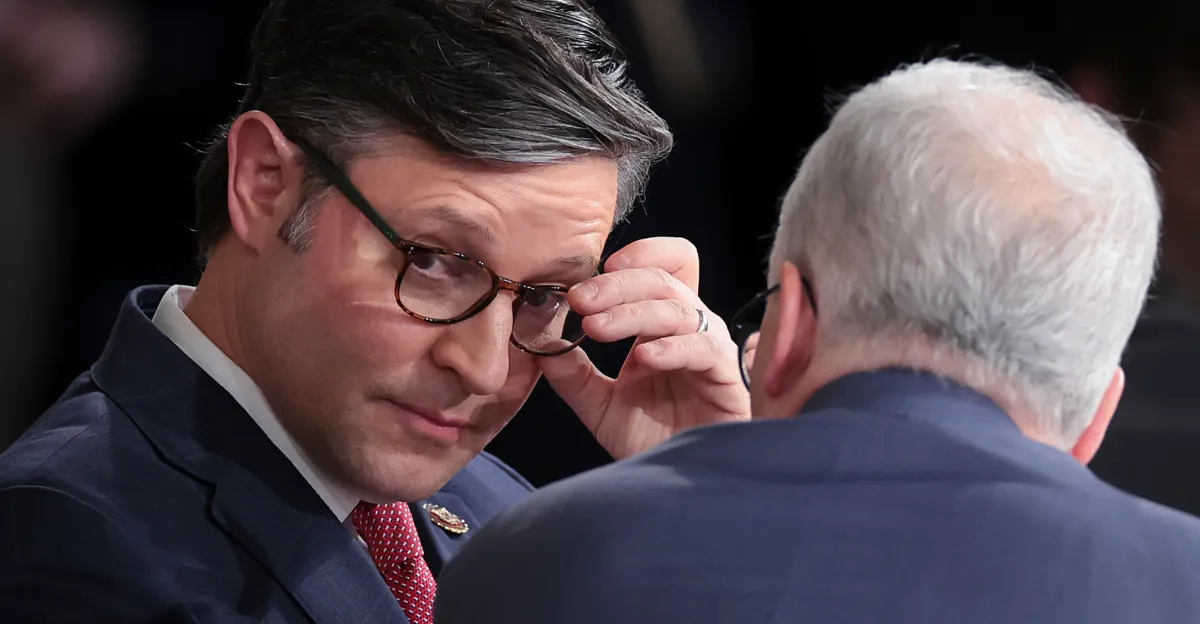
Democrats took control of both chambers of Congress in Tuesday’s midterm elections, and the fallout started almost immediately. House Speaker Mike Johnson told his staff Wednesday that he will not lead House Republicans in the next Congress, while President Donald Trump said he expects to get along with the new majority and noted that he still holds the veto.
The Associated Press called the Senate for Democrats late Tuesday and the House early Wednesday. Reuters reported the party at 54 Senate seats to Republicans’ 44, with Alaska and Mississippi still uncalled, and a gain of at least 30 House seats.
It is the first time Trump will face a Democratic-controlled Congress in both chambers, and party leaders signaled they intend to use that power right away.
Johnson Steps Aside as House Republicans Turn on Each Other
Johnson delivered the news to staff on a Wednesday morning call, and his office later confirmed he will not run for minority leader. The decision reverses what he said in October, when he insisted he planned to remain the top House Republican even if the party lost its majority.
Axios reported that GOP lawmakers are already circling. One House Republican said every member of leadership will draw a challenger, and another said they see no path for Johnson to stay on. Johnson had spent months campaigning in more than 40 districts across 22 states. Trump praised him in a Politico interview on Tuesday but stopped short of endorsing him, saying the speaker has to make that call himself.
Trump Tours His Ballroom, Then Brushes Off the Loss
Trump invited reporters in the morning after the vote to look over the ballroom under construction at the White House, an appearance that lasted nearly an hour. He turned only briefly to the elections. He said he would probably get along with Democrats unless they decide to be destructive, then reminded them, “I have the power of the veto.”
Trump acknowledged that the war with Iran, which began in February, contributed to the losses, but he stood by the decision to launch it. Vice President JD Vance went further in a long social media post, blaming the war directly and challenging anyone who thinks losing the Senate for years was worth it to make that case. Florida Gov. Ron DeSantis described the results as close to catastrophic for the party.
Jeffries and Schumer Set Their Priorities
House Democratic Leader Hakeem Jeffries, who is on track to become the first Black speaker, said his majority will focus on affordability and accountability and will not act as an extension of the Trump administration. Senate Democratic Leader Chuck Schumer predicted he will be re-elected majority leader and described the new Senate as a generational remake of the map.
Democrats are expected to open investigations into the administration, the president’s family and his allies once they are seated in January. A Democratic Senate can also block nominees, including any Supreme Court pick, which has raised fresh questions about how long Justices Clarence Thomas and Samuel Alito will stay on the bench. New York City Mayor Zohran Mamdani urged his party in a video to deliver for voters worried about prices.
How the Map Flipped in Texas, Kansas and Beyond
The wins reached deep into Republican territory. In Texas, James Talarico beat Ken Paxton for the state’s first Democratic Senate seat since 1988, and Democrats also ousted Gov. Greg Abbott, according to Reuters. Kansas elected its first Democratic senator in nearly a century, and South Carolina voters rejected Trump’s hand-picked Senate candidate. In Michigan, Abdul El-Sayed became the first Muslim elected to the Senate.
There were other firsts at the governor level. Keisha Lance Bottoms won in Georgia as the first Black woman elected governor in U.S. history, and Deb Haaland became the first Native American woman elected governor in New Mexico. Republicans lost ground in 99 percent of the roughly 2,100 counties counted by Wednesday morning, according to tallies by Reuters and USA Today.
A Lame-Duck Funding Fight Comes First
Republicans still run Washington until January, and they face at least one must-pass bill to fund the government beyond December. They could try to use that lame-duck window to lock in conservative priorities before Democrats take over. Voters, meanwhile, made clear what mattered most: the cost of living, the toll of the Iran war, tariffs that courts have partly struck down, and concerns about corruption.
Whether the Senate lands at 54 or 56 Democrats depends on the Alaska and Mississippi races, which remained uncalled Wednesday morning. Either way, Washington is heading toward two years of divided government and likely deadlock.