

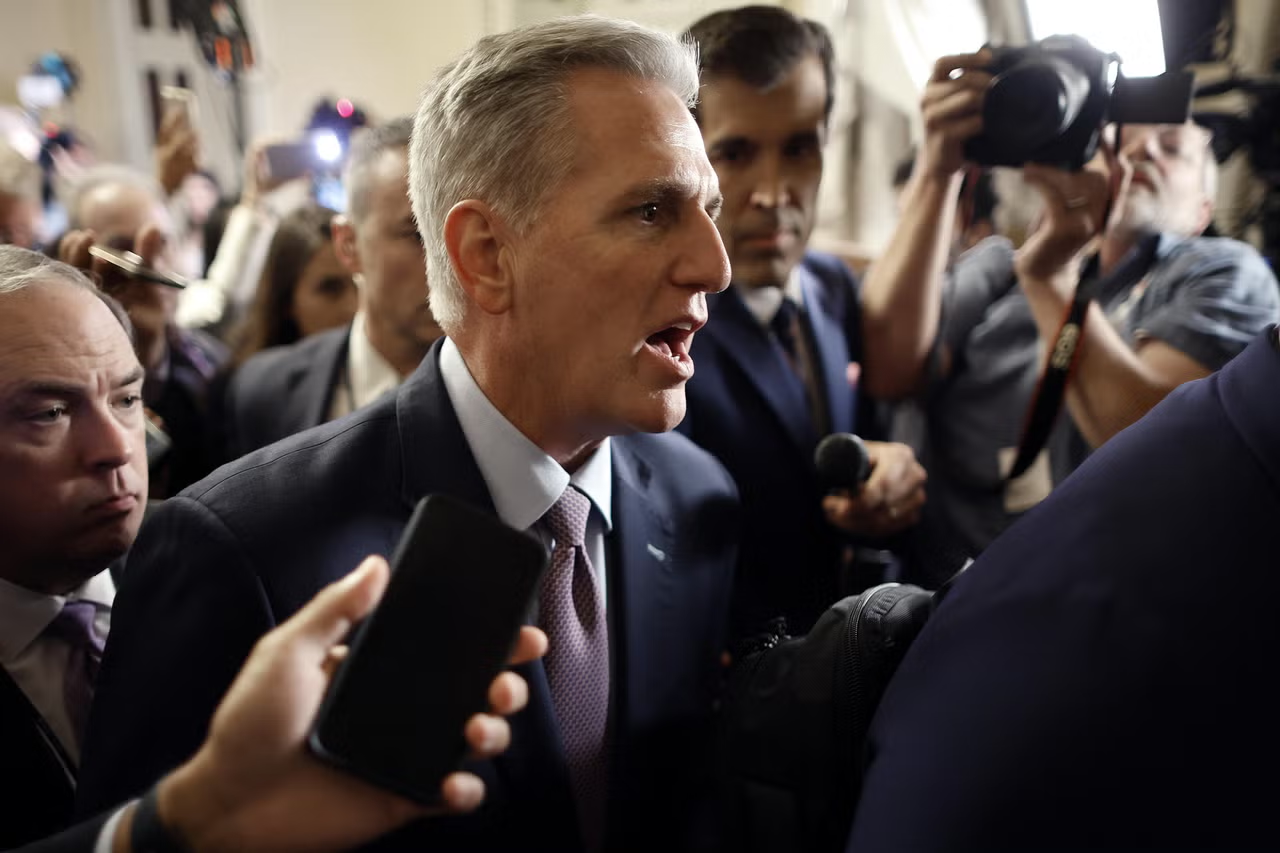
On October 3, 2023, the House of Representatives voted 216 to 210 to remove Speaker Kevin McCarthy. A motion to vacate was used to remove a sitting speaker for the first time in American history. A small group of conservative Republicans led the mutiny, and all of the House Democrats supported it. People said that McCarthy broke promises he made during talks about spending.
A few days after McCarthy worked with Democrats to keep the government running, Rep. Matt Gaetz (R-Fla.), the campaign's leader, sent in the resolution. Eight Republicans eventually voted to kick him out, showing how divided the GOP caucus is.
Because of the sudden firing, the House had very little power to do anything. The committee hearings were put on hold, the legislative process was put on hold, and talks about important issues like deadlines for government funding, border security, and help for Ukraine were also put on hold. There was a leadership crisis in the House that had never happened before in modern times. It couldn't do official business or introduce new laws without a speaker.
After the vote, McCarthy told the media that he would not run for reelection. He said, "I think I can keep fighting for the American people in other ways," because he was angry that only a few Republicans had helped Democrats get rid of him.
Both sides called the event disruptive and historic. There was no guide for how to deal with a long time without a leader, so even experienced members said the chamber had gone into "uncharted territory."
In a historic first, "a few Republicans... ousted Republican Speaker Kevin McCarthy."
Budget experts warned that the removal would cause other financial problems because Congress was already dealing with a lot of important deadlines for government spending. Foreign policy experts say that a lack of political leadership could slow down decisions about military and humanitarian aid, especially for Israel and Ukraine.

Johnson was chosen Speaker a few weeks after the GOP's chaos.
After three weeks of fighting, many unsuccessful candidates, and heated debates behind closed doors, House Republicans were able to choose Rep. Mike Johnson (R-La.) as Speaker on October 25, 2023.After three weeks of fighting, a lot of candidates who didn't win, and heated arguments behind closed doors, House Republicans were finally able to choose Rep. Mike Johnson (R-La.) as Speaker on October 25, 2023.The vote ended the GOP's time of fighting and the many candidates, such as Jim Jordan, Tom Emmer, and Steve Scalise. They couldn't get the group to work together.
After a break of 22 days, the House went back to work. At the time, all Republicans backed Johnson, a conservative who had never held public office before.After he was elected, Congress was able to start working on a number of important issues, such as the budget, national security policy, and laws that affect everyone.
ven though order was restored, analysts pointed out that Johnson got the same narrow, split majority that hurt McCarthy's time in office. As the deadline for the budget approached and the start of complicated international aid packages began, political analysts warned that problems within the government were likely to come back.