

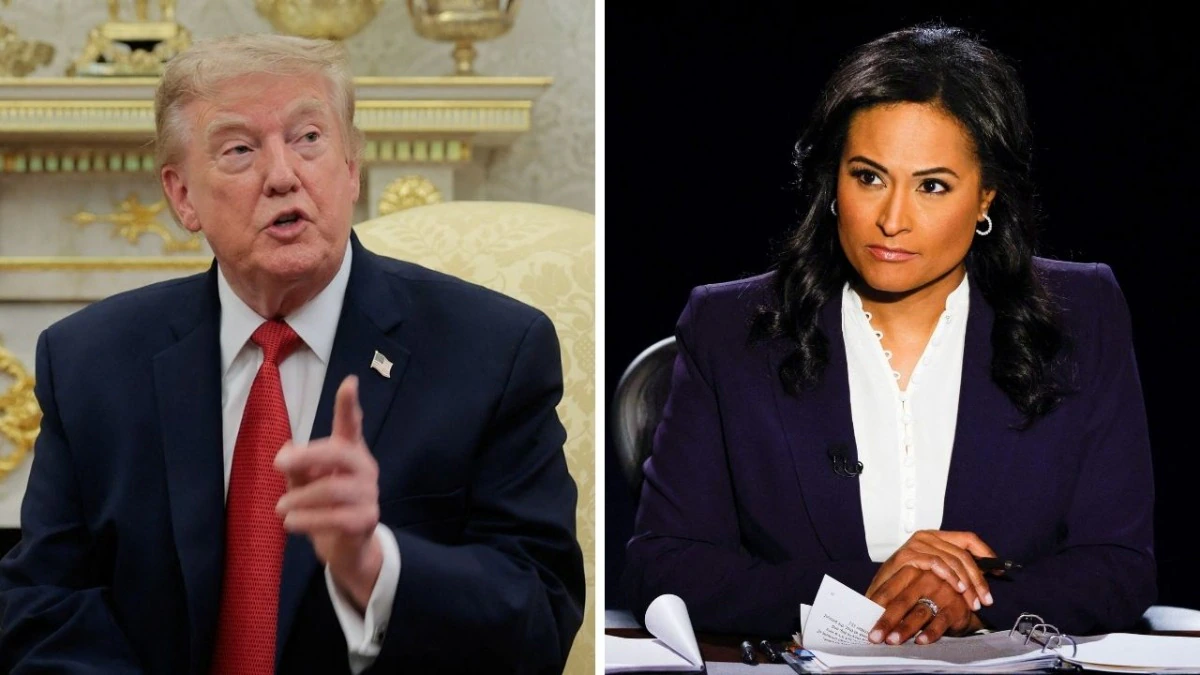
President Donald Trump said Sunday he would be reporting NBC News journalist Kristen Welker to the Federal Communications Commission for what he called an inaccurate characterization of his record of endorsing political candidates.
Welker said Trump's endorsements had produced "some mixed results" in the 2026 Republican primaries, prompting the threat. Trump disputed the characterization and said she should receive an FCC "rebuke or punishment."
The fight is one of Trump's continuing battles with major television networks and journalists whose coverage he sees as unfavorable. It also raises questions about the extent to which the federal communications regulator can intervene in news coverage, and whether government pressure on broadcasters could affect freedom of the press.
Welker's View Disagrees with Trump
Trump's impact on Republican primary races has been inconsistent, said NBC's Meet the Press moderator, Welker.
Trump had a very different take on that evaluation.
"The candidates I have endorsed have done extremely well," he said in a Truth Social post, citing a 100% success rate of his Senate endorsements and a 98% success rate of his House endorsements. Welker's characterization was a "purposeful inaccuracy," he said.
Trump said he would complain to the FCC about Welker and called for a "rebuke or punishment."
The president has often criticized NBC and other major broadcasters for their coverage of his administration, and the latest disagreement is part of a broader fight between Trump and national news outlets.
NBC Supports Kristen Welker
Trump has criticized Welker, but NBC News has stood by her.
The network said she was one of the strongest journalists in the industry and rejected the notion she should be punished for her reporting.
The face-off follows years of tension between Trump and Welker.
Welker has interviewed Trump multiple times and often pressed him on contentious political and policy issues. Trump has previously criticized her questions and NBC's coverage of his presidency.
The latest spat is, therefore, another escalation in their long-standing relationship.
FCC Role Questioned
Trump's call for FCC action has reopened debate over the regulator's power over news organizations.
The FCC regulates broadcast communications. It handles some aspects of television and radio operations. But its ability to punish individual journalists for content of news reporting is far more constrained.
Legal experts quoted by The Guardian said it's unclear whether the FCC has the authority to punish a journalist simply for making a disputed statement during a news broadcast.
This distinction is important because criticizing a news report is not the same as a regulatory violation.
The FCC's jurisdiction is primarily about broadcasters and licensing, not a general factchecker or disciplinarian of individual journalists.
That points to Trump's demand potentially creating political pressure but not necessarily leading to a formal move against Welker.
Dispute Arises Amid Broader Trump-Media Clash
The run-in with Welker is part of a larger pattern of conflict between Trump and news organizations.
Trump has repeatedly complained of unfair coverage by major media outlets and urged regulators to take action against broadcasters whose coverage he deems unfair.
The agency also has faced pressure in the past over complaints involving major television networks, adding interest in the administration's ties to the FCC.
Trump's latest comments therefore have significance beyond the specific spat with Welker.
Press freedom advocates have warned that the use of regulatory power by government officials to intimidate journalists could have a chilling effect on political reporting.
Supporters of Mr. Trump's approach argue that broadcasters should be held responsible for broadcasting information they know to be false or misleading.
Trump Points to Primary Wins
Trump's defense of his endorsement record rests on his power in the Republican Party.
He's been a kingmaker in plenty of Republican primary battles and has often pushed candidates who share his political agenda.
Trump pointed to a series of recent wins as proof that his endorsements pay off.
But his track record has been mixed in terms of successful and unsuccessful candidates, says Welker.
So, part of the disagreement has to do with how you measure the success of political endorsements.
Trump's math is based on the percentage of endorsed candidates who won elections, while his critics point to individual losses and races where his preferred candidates didn't win nominations.
FCC Drive Raises Concerns About Press Freedom
The fight has breathed new life into the conversation about the relationship between the White House and independent news organizations.
Presidents have long complained about news coverage but calls for government regulators to punish reporters carry more weight because the FCC has the power to regulate broadcasters.
Legal experts doubted whether the commission could legally penalize Welker based on the disputed characterization of Trump's political record, The Guardian reported.
Any formal FCC action could therefore face major legal and constitutional challenges.
The First Amendment broadly protects the press and political speech. The Federal Communications Law imposes specific obligations on broadcasters.
If the dispute turns into a formal regulatory case, the exact borders between those zones could become increasingly important.
Trump's NBC Fight Heats Up Media Tensions
Trump's recent attack on Welker is the latest in a string of altercations he's had with television networks and individual journalists.
His administration has repeatedly challenged coverage it believes to be biased, while media organizations have defended their independence and editorial choices.
What's especially meaningful about the Welker controversy is that it involves a relatively short assessment of Trump's political performance rather than a larger investigative report.
NBC's public support of Welker suggests it has no plans to back away from her reporting.
What Happens Now
Trump has said he will file a complaint against Welker with the FCC but it's unclear what, if any, action the commission could take.
The FCC has not said it is opening a proceeding against Welker because of Trump's comments.
The dispute could still spark more political and legal controversy, especially if Trump or his allies were to formally ask the regulator to investigate NBC's coverage.
For NBC, the controversy is another test of its relationship with the Trump administration.
Any FCC decision to wade into the dispute would also raise larger questions about the limits of government power over news coverage.
Trump's threat against Kristen Welker has turned a squabble over his endorsement record into a larger battle over media regulation, presidential power and the independence of American journalism.
Reporting for this story drew on coverage from Washington Post, The Guardian, and Reuters.