

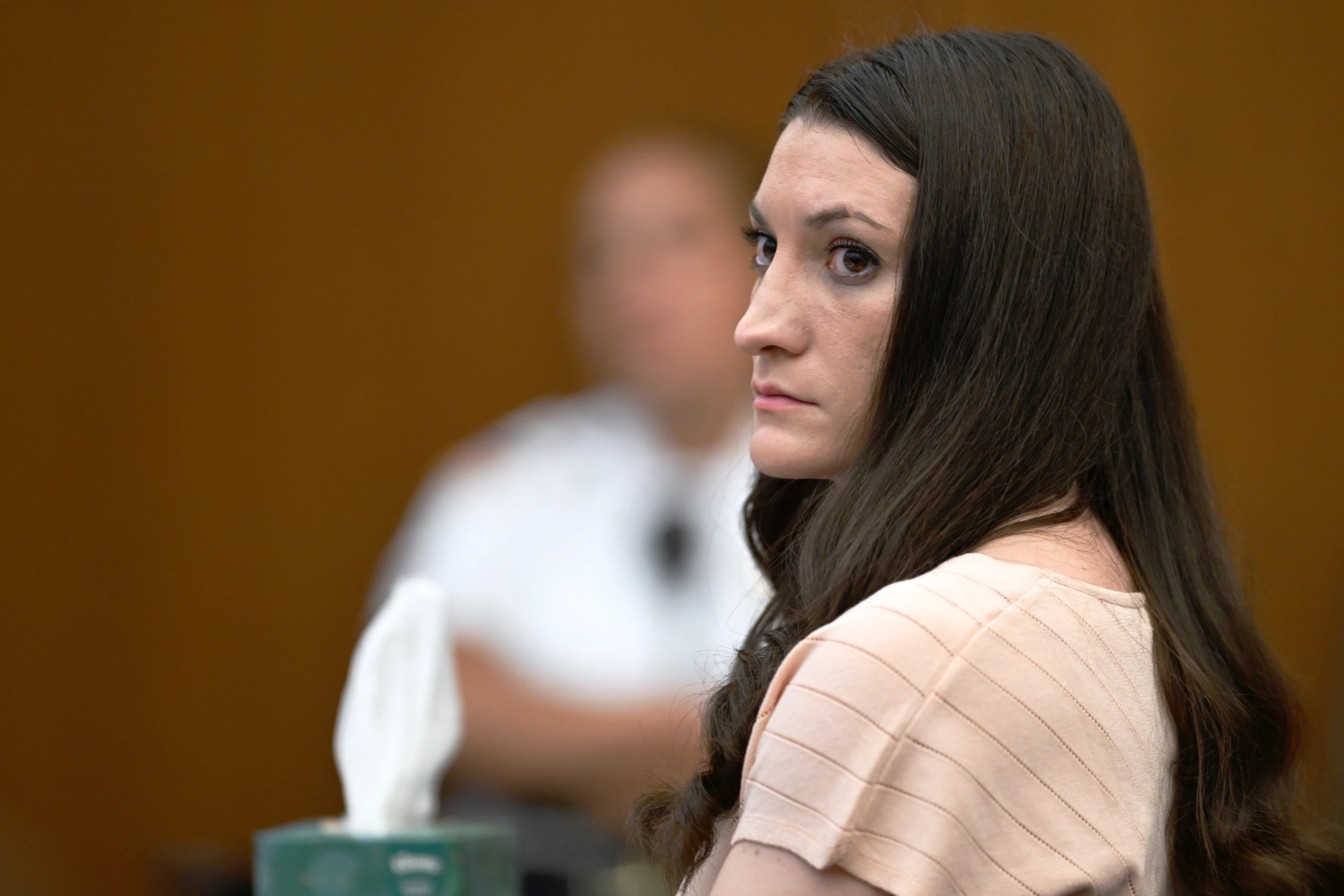
A Massachusetts jury goes back to work Friday, picking up where it left off in one of the more wrenching criminal cases the state has seen in years: whether Lindsay Clancy should be held criminally responsible for killing her three young children in 2023.
Clancy doesn't dispute that she strangled her children. That much isn't in question. What jurors have to sort out is her state of mind at the time — and here the two sides couldn't be further apart.
Her defense says she'd lost touch with reality altogether, in the grip of postpartum psychosis, a severe and uncommon mental illness that can surface after childbirth. Attorneys have pointed to a monthslong stretch before the killings during which Clancy's mental health visibly deteriorated, including a stay in a psychiatric hospital not long before the deaths.
Prosecutors reject that framing entirely. Their version: Clancy understood exactly what she was doing. They argue she was depressed, had grown tired of living, and made a deliberate decision to end her children's lives along with her own.
A Jury Still Weighing Its Options
The panel spent a few hours behind closed doors Thursday without reaching a decision, and picks the deliberations back up Friday. Jurors have several possible paths in front of them — convicting Clancy of murder, finding her guilty of the lesser charge of manslaughter, or acquitting her outright if they conclude her psychiatric condition left her without control over her actions.
Clancy, 36, has pleaded not guilty by reason of lack of criminal responsibility. She never took the stand in her own defense. Instead, the jury heard extensively from the medical professionals who treated her in the months before the killings, along with friends and relatives she had confided in about her declining mental state. Medical experts called by both sides testified — and disagreed sharply — about what was likely going on in her mind when she killed her children.
The Children and the Aftermath
The victims were Cora, 5, Dawson, 3, and Callan, 8 months old, killed at the family's Massachusetts home. The timing has been a recurring focus of the trial: the killings took place less than three weeks after Clancy had been discharged from a psychiatric hospital.
After strangling her children, Clancy cut herself and jumped from a second-floor window in an attempt to end her own life. She survived, but the fall left her paralyzed from the waist down — an injury she still lives with as the trial nears its conclusion.
This story includes discussion of suicide. If you or someone you know is struggling, the national Suicide and Crisis Lifeline in the U.S. is available by calling or texting 988.
Reporting for this story drew on coverage from The Associated Press.